February 07, 2011

The life and times of Bernard Licence G4DCG

As many of you may know Bernard Licence G4DCG went Silent Key just before Christmas and I feel it only fitting that we celebrate his life and times as a radio amateur.


I know his early life involved serving in the RAF rising to the rank of pilot officer during WWII. From looking through his DVD collection his interest in aviation never wained as he explored the history of everything from the aircraft of WWII up to present day aviation. There was even a homemade copy of a movie based on Donald Campbell's life and ill fated trials with Bluebird on Conniston Water.

I was to learn that Bernard's favorite type of music included Jazz and Big Band in many forms with bands like: Stan Kenton, Count Basie, Shep Fields and his rippling rhythmn Orchestra, The famous Jazz drummer Gene Krupa, he also enjoyed listening to vocalists like Diana Shore, Ella Fitzgerald and last but not least... The Rat Pack of Frank Sinatra, Dean Martin and Sammy Davis Jr.

Another of his interests was the Motorcar especially the history of MG and Jaguar.

Bernard worked for BT in a managerial position before enjoying a good lengthy retirement overlooking the Lune Estuary a very advantageous location that many radio amateurs myself included can only dream about.

But back to amateur radio:

Ian G0VGS was asked to visit Bernard a few weeks before he went Silent Key so that he could document his radio equipment, this was not the easiest of meetings because it was clear at that point that Bernard was very poorly and Ian had known Bernard for many years. Bernard was to loose his fight with cancer just a few weeks later.

Ian Linda Bob and Damien returned to dismantle and take the equipment away a few weeks after Christmas with the intention of offering it for sale to the local amateur community.

One of Bernard's solidstate radio's of choice was Yaesu's FT757GX. Developed in the 1980's the radio had an output power of 100w on SSB and CW but was limited to 25w AM/FM. Full specs below.


SPECIFICATIONS
Type: Amateur HF transceiver
Frequency range: TX: 10-160 m + WARC
RX: 0.5-30 MHz
Mode: AM/FM/SSB/CW
RF Power output: FM/SSB/CW: 100 W
AM: 25 W
Receiver system: N/A
Sensitivity: N/A
Selectivity: N/A
Image rejection: N/A
Voltage: 13.5 VDC
Current drain: RX: Max 2 A
TX: Max 20 A
Impedance: 50 ohms, SO-239
Dimensions (W*H*D): 238*93*238 mm


Although not a contact of Bernards you and see and hear an FT757 in action on the link below.

http://www.youtube.com/watch?v=Npdm7ty9F9E&feature=related
Yaesu FT757GX listening to VK4SY on 80m


Having tried the FT-757GX Bernard upgraded to the Yaesu 767GX and what a great radio this is.


This is a very versatile radio giving you 100w on HF and the added plus benefit of installing optional 6/2/70 10w modules. Having read the reviews of everyday radio amateurs on eham, I don't think I found anyone with a bad word for the set.

Once this radio was put on the market it didn't take long for a buyer to come forward with his money to buy the radio. To all intents and purposes the radio really sold itself. After getting the set home the new owner stripped it down and gave it a service and enjoys using it on a daily basis.

Here's a you tube link if you would like to see a video of set in action with 2E0HTS

http://www.youtube.com/watch?v=pI4hw_ENgn8&feature=player_embedded#


Another video of a Topband QSO with G0RRL http://www.youtube.com/watch?v=4XXBnykzq4s&feature=related

Bernard also had a number of classic valve transceivers and receivers in his collection that was nice to see.

Halicrafter SX-110


G4DCG helps to extend the range of the DX-Cluster.

Before the day when the internet was freely available access to the DX Cluster was acheived via packet radio. Ian G0VGS was very grateful to Bernard for allowing him to install a X1J node set up of 3 TNC's and 3 radios that allowed access to the cluster from the Fylde area. The callsign was GB7LA.

Antenna's.

One of Bernard's area's of experimentation was in the field of antenna construction and whilst he had professionally made beams by people like Cushcraft he also experimented with wire antenna's, traps and baluns.

Damien G0LLG and myself took on the job of dismantling the antenna's setting off from Morecambe on a very foggy Saturday morning most of which cleared by the time we reached Bernard's home, however the frost was to stay with us all day.


Our first task was to examine the site and work out a plan that would allow us to work effectively and safely. You might see why from the picture below.


After assessing the situation It was decided that we would start by lowering the vertical sections of the mast and then slowly tilting the mast so that we could gain access to the beam sections.


Damien Lowered the mast slowly whilst I checked for any problems as each section came down. One section did give us a little trouble but this was fix by applying a little lubricant.


Once the mast was lowered vertically, I took over on the other winch and Damien helped guide the mast down and looked out for snags caused by the bushes you can see on the right side of this picture.


I secured the winch and we set to work taking each antenna section apart. Before removing the section it was marked so that we had a reference point for reassembly. Once removed each section was laid on the ground in line with its position on the boom. There were one or two sections that needed a little encouragement to come apart but a little WD40 sorted that problem.

Once all the sections were removed we reassembled them making use of the marks and marked them up that the antenna could be put back together again with ease.


Once the boom had been removed we turned our attention to the rotator and finally the coaxial feed cables to the mast. Sadly 90% of the coax was water damaged.

Damien and I returned a few days later to take down the numerous wire antenna's. This took a little longer than expected because we had to take time out for tea and biscuits followed later by some welcome Fish and Chips. With all the antenna's down and stored in a place of safety. Damien and I can take pleasure in a job well done but we never lost sight that we were dealing with the station of a well respected fellow amateur radio operator who was not just a perfect gentleman at all times, but a fellow student in the ever changing hobby of Amateur Radio. From our time taking the antenna's down we soon realised that G4DCG was a man who strived to excel to the best of his ability in all that he turned his hand too.

Thanks for taking the time to read this blog. My personal philosophy is in celebrating the life of a fellow radio amateur as we morn the loss. My glass is in perfect balance being both half empty and half full at the same time.

73
Brian G0RDH

January 25, 2011

VP8DMH/P at Fossil Bluff

Hello and happy 2011 from Antarctica!

As well as our main base here at Rothera, we maintain and staff two forward summer-only fuel depots. These are Fossil Bluff, at 71 degrees South, and Sky Blu at 74 degrees South. Each season a mix of old and new Winterers, as well as some summer-only staff spend time in the field making sure they both run smoothly.

Fossil Bluff is an old Wintering station, with a comfortable wooden hut with bunks, and water on tap, taken from run-off from a near-by glacier. It's also on Alexander Island, one of the rarest IOTA groups, so when I heard I was being sent there for a week or two I knew I had to try and put it on air. The Bluff already has an HF station, designed for regular weather skeds with Rothera, but the rig is an Icom IC-78. It does the job for B.A.S. purposes, but lacks a voice keyer (among other amenities), so I packed up my Elecraft K3 and P3 in preparation for the trip.

I flew out to Fossil Bluff on one of our Twin Otters on the 13th of December, and spent most of the rest of the day working around the hut and setting up the HF, although I did make a couple of 20m QSOs in the evening.


Fossil Bluff Hut

Tuesday brought some more QSOs, but not many; the hut batteries weren't in good shape, and the broadband commercial dipole a little too low to the ground for good DX take-off angles. I requested a reel of wire and some other tools from Rothera on the next Otter to come our way, with the intention of building a 20m vertical to be positioned further away from the generator, but other than that there wasn't much to be done besides persevere and make the most of what the propagation had to offer.

Normally when there is flying in the area we have to do met observations every hour, which are then passed back to Rothera over HF. On Wednesday, however, no planes were scheduled to come our way, which meant much reduced met obs and more time for uninterrupted operation on the amateur bands! (OK, and a bit of reading in the sun.)


Reading on the verandah.

Thursday brought a change of companion (there are always at least two people at a field station at any given time), and the wire I'd requested. Dickie, who had been at the Bluff when I arrived, left to return to Rothera and I was joined by Alan, one of the outgoing Wintering field assistants (alpine and polar experts, and all-round Antarctic Heroes, who look after scientists in the field) and I set about the construction of a 20m vertical with his help. The project was nearly scuppered by the failure of the soldering iron, but, as for all things B.A.S., a fall-back was on hand. Our standard-issue field radio boxes include a soldering iron tip. The idea is that if a field party needs to do any soldering, they jam the tip onto a screwdriver (also provided) and heat it in their Primus stove. I'd always been somewhat skeptical of the idea, but decided to have a go. The result certainly wouldn't have won any awards for prettiness, and I'm not sure I'd like to take the 'soldering kit' to my K3, but it did the job...


Unfortunately, the antenna itself proved difficult to set up satisfactorily, and I didn't get much use out of it. Still, at least the construction was an interesting project!

Every evening, we had a regular sked with Rothera at 00:00, so before long I settled into the routine of working 20m through the day, trying to fit operating time in around met skeds and aircraft operations, and then working 40m in the evenings for a few hours after our sked.

Other than playing radio, there is plenty to occupy your time at the Bluff.


Alan making bread.


Plane visits often involve a coffee break on the verandah...


Taking a break from SSB to try to work HA0DU on CW.


The view East from the front door - the mountains of the Antarctic Peninsular over the George VI Sound, with sun halo.


Alan ready for plane fuelling at the skiway fuel depot.


The way home -- when B.A.S. say you'll be flying out tomorrow, they really mean it!


Flying a Twin Otter over Marguerite Bay on the way back to Rothera.

January 17, 2011

West Manchester Red Rose Rally

Hello Folks,

Here's my first Rally Review of 2011. Along with Damien G0LLG, Hughie G4UME and Ian G0VGS I attended the West Manchester Red Rose Rally for the first time this year. Within minutes of joining the queue of amateurs waiting to get into the rally we were in deep conversation with other radio amateurs about their interests in the hobby and genuine interest was shown in the activities of Sands Contest group.

The rally was held in a new venue from previous years.


The George H Carnall Leisure Centre, was picked because it offered more room for stands and exhibits. I thought an A4 handout listing the exhibitors, where they were located at the rally and contact details would have been useful, however
on a plus note I recognise and appreciate how much work the club officers and members will have put in to make the rally possible and would like to express my thanks to all involved.

I felt a little disappointed upon entering the rally at the lack of traders in attendance, However with these hard economic times you have to recognise the distance the big emporiums need to travel and the overheads of paying staff for their services. I'm sure the massive increase in fuel costs will have done nothing to help.

I later learned from one of the traders that the rally organisers had been let down by somebody who had booked a large number of table and failed to turn up. At this point my disappointment wained and my thoughts went to the group who had done their best to make this rally a success.

Food and Drink:

Food and drink was available at reasonable prices for example I have a potato and meat pie and a cup of tea for just under £2 There were table and chairs available to eat your food and although at first glance there was not enough Damien and I found a table to sit at because rally goers keen to get back in the halls another possibility is that Bar that open whilst we were waiting to be served.

So what of the stands and exhibits:


The only radio amateur emporium in attendance was LAM Communications who I'm sure had a busy day from start to finish.

The RSGB had a stand with all the usual goodies on offer along with help and advice available from our regional Rep Kathy Wilson and our RSGB President Dave Wilson


Kanga Kits had plenty on offer for both the seasoned constructor and those just starting out. For more information please click on the link below.

http://www.kanga-products.co.uk/

Pro Whip Antennas


Pro Whip Antennas had a good display of antenna's covering most bands

If you would like to see more of their range and applications for different antenna's please click on the link below.

http://www.prowhipantennas.co.uk


Snowdonia Radio Company

Snowdonia Radio Company attended the rally and were happy to talk about the products they had on display. The company was formed in January 2008 by Simon Poyser MW0GSR and although not an old company its good to see that Simon is celebrating his third year in business. I have to confess to knowing little about the company and it products but if you would like to know more click on the link below. The website is well laid out and easy to navigate. Along with the general products take a look at the downloads link of the site that contains instruction manuals, data sheets and independent reviews.

http://www.snowdonia-radio-company.co.uk/about-src.html


Moonraker was established in 1978 and since that time I think they have covered most of the major rallys. Moonraker had a large display of antenna's and radio amateur products available at the rally and were kept busy throughout the day.

if you would like to learn more about the company and the products they offer please click on the link below.

http://www.moonraker.eu/Amateur-Radio

G4VAP Components

It was good to see Ian G4VAP in attendance selling a range of quality components etc.

I have know Ian for many years as an accomplished keen and well respected constructor. In an effort to encourage club members into the joy and satisfaction of practical home construction Ian introduced a construction competition at Morecambe Bay Amateur Radio Society with the aim of encouraging both new and seasoned amateurs to make construction projects. Ian's only pet hate was projects marked up with Dyno Tape. The construction competition is still running today and now well over a decade old. If you don't already have something this going at your club,society or group, why not give it a go?


A view of the second hall

Some old sets that caught my attention:

Those of you who have followed this blog over the last year will have noticed that where possible I have introduced pictures, basic information and links to radio sets and other equipment from yesteryear

Philips D-2999


The Philips D-2999 was produced in the late 80s and intended as a modern alternative radio for the SWL and what a good looking radio it is. The set appears ergonomically well designed boasting a direct entry key pad and 16 memories for your favorite stations and modes. Although I never switched the set on I suspect it would have sounded very good with audio produced throgh a 3" speaker at the front and a 7" speaker on top.

For a more detailed article on all the features, take a look at the web url below.

http://shortwaveradio.ch/radio-e/philips-d2999-e.htm


I loved the Russian hat modeled on to of the Eddystone Receiver..... And talking of which.

Eddystone 870

This 5 tube single conversion superhetrodye receiver was made in the Eddystone Factory Birmingham England between 1956 -1959. The casing was made out of metal and in the case of the radio at the rally it was painted in a nice ruby red.


The radio would have cost between £30 to £35 to buy when new. It may not sound a great deal but would have been a considered purchase in its day taking into account the weekly wage packet at that time.


for more information take a look at the link below

This site has loads of information on this set including circuit diagrams and well worth a visit. It also hosts a list of many Eddystone radios made throughout the years. http://www.radiomuseum.org/r/eddystone_870s87.html

Francis Norris (Radio Restorer/Collector)

It was good to meet up with Francis again who had a traders stand at the rally. Francis has a passion for radio restoration restoring both Military Radios and those sold on the commercial market.

The first thing to grab my attention was the Admiralty Morse Key.


I was surprised to find the key taken back to its base metal but Francis told me that the paint work was in very poor condition when he bought it and after starting to strip the paintwork back liked the shiny look and left it at that. The picture does not do the finish justice.

I tried the key and it was a smooth as a Rolls Royce to operate. The previous owner had set it up to perfection with a very smooth well balanced action.

British Navy Morse Key

This Morse key is manufactured in England in the 1950's for the British Navy. It is a large heavy desk top key and is fully adjustable and very enjoyable to use. On / Off Switch is provided on the front, and the cable terminates with a 4 pin Larkspur type connector.


Information accredited to the site below.

http://www.armyradio.co.uk/arsc/customer/product.php?productid=1448&cat=0&page=7&js=n


Inside the Key


The original Key also known as the NATO Key would have has a paint finish like the one below.


This Photograph is attributed to the

Morse Keys Gallery dedicata al caro Mauro Russo - IØMYQ
http://nuke.ik0ixi.it/Tastitelegrafici/tabid/478/Default.aspx

Lafayette KT-200 Communications Receiver


I could go into the history of this set and would enjoy doing so if I had not seen the URL link and the work done to create a first class review.


There is an excellent article covering the history of this radio along with original adverts before the author takes you graphically through the restoration of his set
http://www.radioremembered.org/kt-200.htm

Cossor Radio

On the commercial radio side of products available Francis had a nicely restored Cossor Radio that dates back to 1940 and was known as Model 77 upright.

Below are a couple of pictures I took of the radio Francis had for sale and I think you will admit the radio is in showroom condition.


I have copied and edited the information below from the following website

http://www.worthpoint.com/worthopedia/cossor-radio-model-77-upright-ca-1940

I believe this is a Model 77 made around 1938 - 1940.

From the internet:
A. C. Cossor Ltd. began in 1859 when the company was established by Alfred Charles Cossor in Clerkenwell, London to manufacture scientific glassware. His eldest son joined the company in 1875, and it was he who founded the A. C. Cossor electronics company. The companies expertise in the manufacture of electrical glassware such as early cathode ray tubes and X-Ray tubes, led the company to diversify into electronics. The younger son Frank Cossor joined the company in 1885, and eventually took over the running of the original scientific glassware company which exists today as Accoson, a manufacturer of sphygmomanometers.

In 1902 the company produced the first British made Braun tube.

SIZE: 21" tall x 16" wide x 9-5/8" deep

According to a send website listed below A.C. Cossor can trace its roots back to 1859 long before the discovery of radio. The article details the important roll the company had in the development of the valve. Its well worth reading.
http://www.btinternet.com/~allan.isaacs/cossorhistory.htm

West Manchester Amateur Radio Club


The following text was copied from the clubs website to give you an idea of how the club was formed by two men with a passion for radio and a vision of like minded radio amateurs getting together.

In the spring of 1981, the late Jack Williams, G4MRM, a businessman from Lowton, and Don Aitchison, G3BSA, (Club President until his death in 2008), had an article published in the Leigh Journal, calling for anyone interested in forming a radio club in the area to attend a meeting at Howe Bridge Leisure Centre, Atherton. The response was excellent and a Steering Committee was formed during the meeting. Among those attending were present members Jerry Coupe, Les Jackson, Ron Ainsworth, and, our current Chairman, Steve Daniels, to name but a few.

Please click on the link below and see what WMARC is involved in today.

http://www.wmrc.org.uk/history.htm

I hope you have enjoyed reading the review.... Radio Rally's are well worth going too, you can still find bargains in those rummage boxes and they make a great day out..... Give a thought to the organisers, they put months of work into putting these events on for us. And thanks to the traders who ship their goods from all over the UK.

73 for now

Brian G0RDH (The Reluctant Contestor)

January 15, 2011

RSGB AFS Contest

Hi Folks,

Members of the Sands Contest Group had the pleasure of taking part in the RSGB AFS 80m SSB Contest this afternoon. It was great to hear the band so active and stations from around the country taking part.

It was particularly nice to hear so many stations North of the Border in Scotland enjoying the contest I missed hearing the on the RSGB 80m CC earlier in the week.

Today's contest was very enjoyable G0LLG, M0ZIF and myself G0RDH took part and if nothing else it honed our operating skills as we look forward to the first major 48 hour contest in March.

Thanks to everybody who worked us, it was good to hear the band so active we look forward to the next contest where we aim to build on our experience so far.

73
Brian

New RSGB CC 80m Contest season

Hello Folks

The first RSGB CC 80m SSB contest took place on Wednesday 12th January. Ian and Kev teamed up at Ian's QTH under Ian's Callsign G0VGS and it was great to see Martin M0ZIF and Damien enter their stations as part of the Sands Group contest station.

Martin recently moved QTH and had little room to put a HF antenna out so it was something of an experiment when he erected a Windom from plans in the latest Sprat.

Damien G0LLG is also limited for space and experimenting with various antenna's including verticals.

I ran the group callsign M0SCG from my QTH via a trap dipole.

As expected band conditions were not at their best, contacts were possible but had to be worked for and this was reflected in the RSGB Robot log. My only gripe relates to a station calling QRZ without putting his callsign out often enough for passing stations to check if the station had been worked.... Its something that just takes a few seconds extra to do. I know he had done nothing wrong but I would rather not wait the 15 minutes for an ID.

73
Brian G0RDH

January 06, 2011

Starting the New Year

As we go into 2011 we have plenty of events planned and many things happening at Sands.
Firstly we now have a permanent Special callsign GB4HCM for Heron Corn Mill. We hope to activate this callsign not only for special events taking place at the mill but also when members get the opportunity to travel to the mill to put the callsign on the air in their own time. More news on that as arrangements move forward.
We have also been hosting a regular 2 meter net on a Wednesday night. The net usually runs on 145.350, if it is free, from 8pm, and is run under the club callsign M0SCG. The net is not only for our members but welcomes anyone who wishes to call in and have a chat.
Some of our members are also providing training for all levels of Amateur Radio licensing at the local sports and social club in Morecambe, feel free to contact us for more information!
The next few months will be very busy with several major contests and local rallies. We hope 2011 will be as much fun and successful as the previous year. We are always looking for new people who want to get involved in what we enjoy doing and more information is available on our main website.
Good DX folks and see you on the bands!


December 22, 2010

Happy Christmas and New Year

All members and friends of Sands Contest Group would like to wish everyone a wonderful Christmas and a very happy New Year. Thank you for all the support and friendship we have had in 2010. See you in 2011 and good DX to all.


December 06, 2010

Group Christmas Meal


Hello Folks,
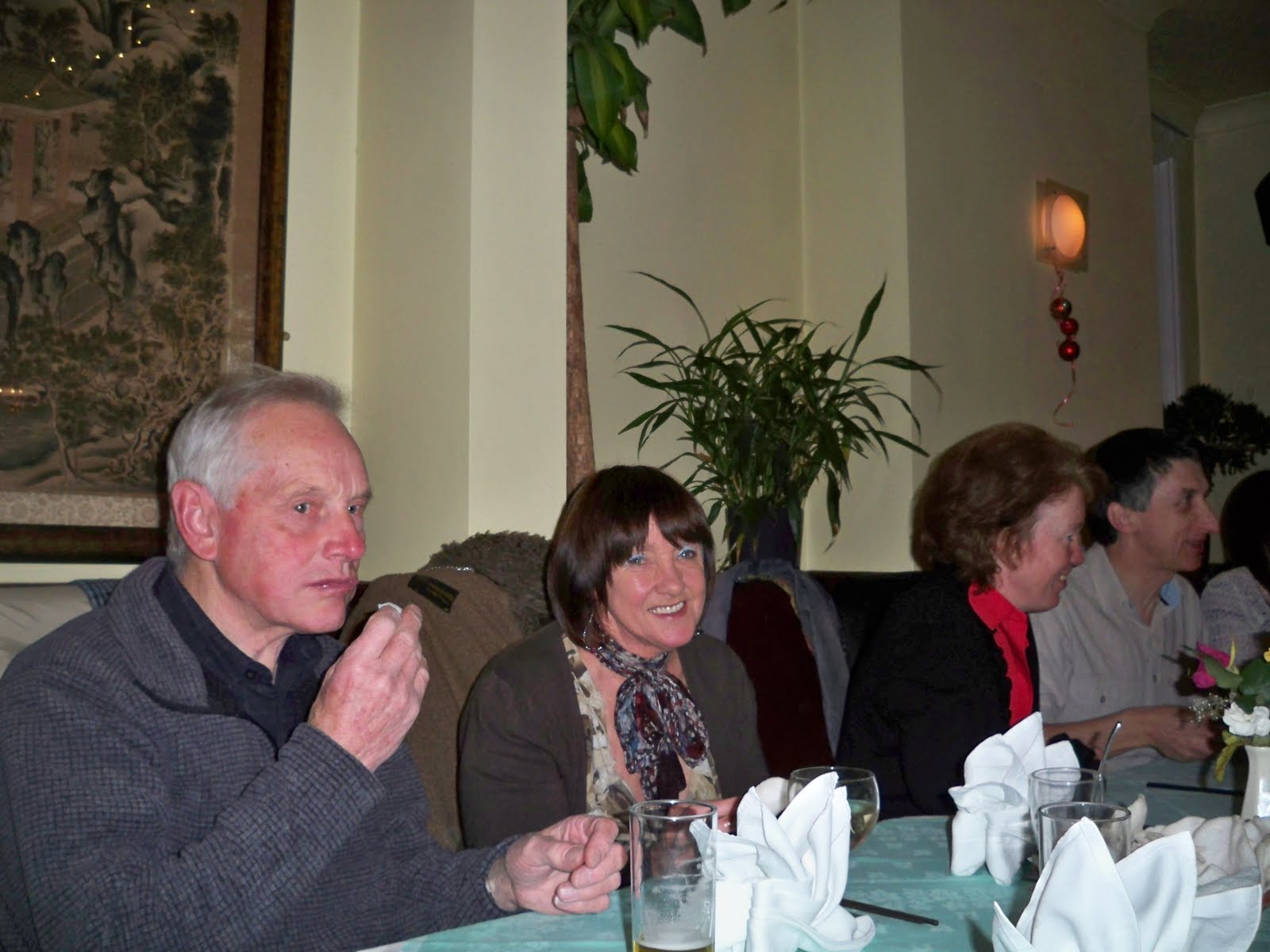
It's Christmas time again and a time we get together with family and friends for what was an excellent night out.

I thought I'd do something different to the normal turkey run that would find me collecting menu's from pubs around the area and asking members for their preferred choice. This year I offered just one venue to the group and thankfully they thought it was a great idea. Once agreed I sorted the venue out and our treasurer Frank invited members to part with their money.

There was a nice sweetener in that I managed to get the cost of the meal down lower than any other Christmas meal I have ever organised..... and I have been organising meals for over 20 years.


Mark and Jenni

Trungs Chinese Vietnamese banquet
Starter
Prawn Crackers
Glass Noodle Salad

Second Course


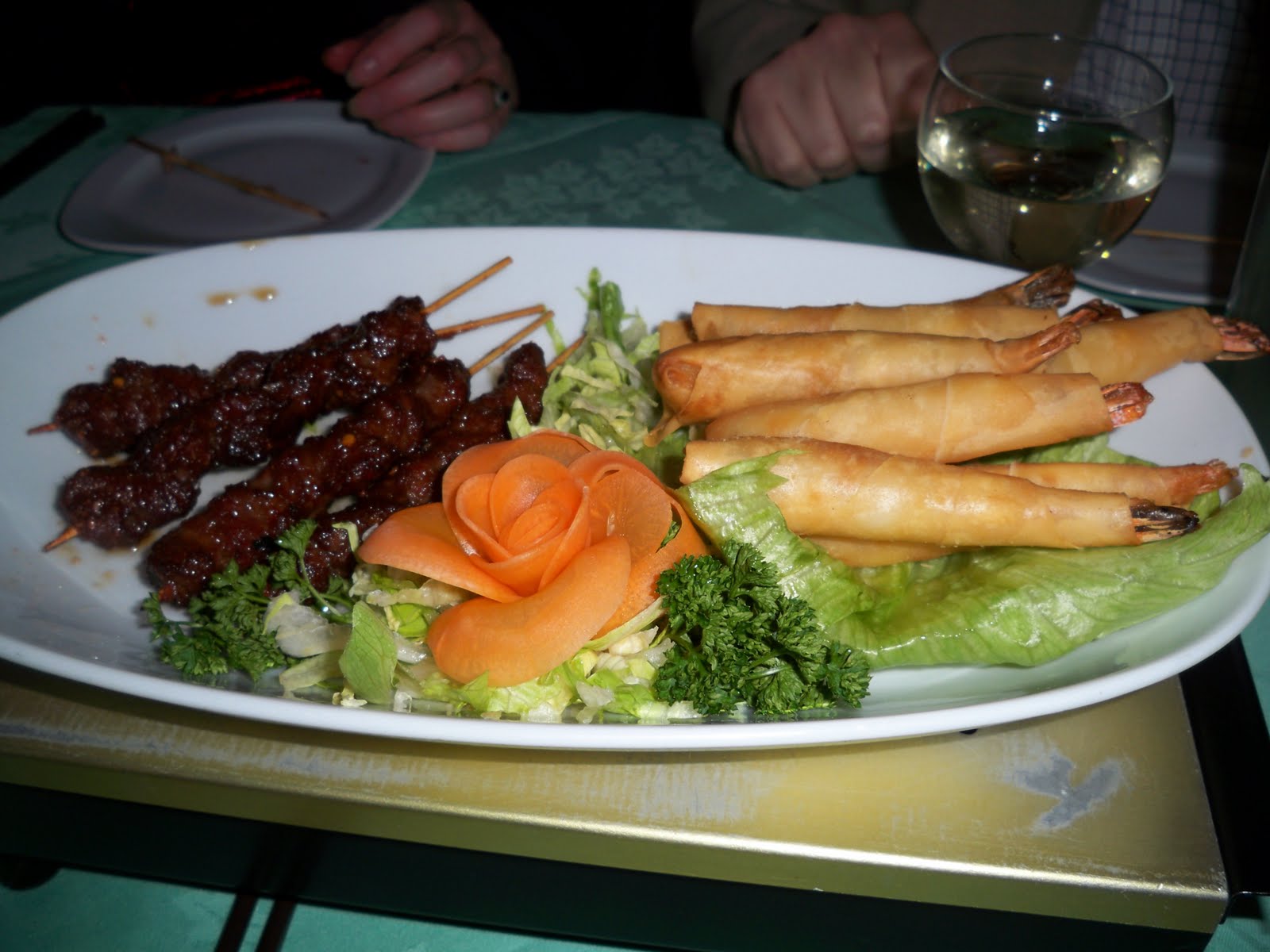
We had already had a nibble at the offerings on this plate we also had shredded duck and pancakes not shown here. I was enjoying the food so much I forgot to take any more pictures.

Skewered Sirloin in Lemon Grass
King Prawn Filo
Crispy Aromatic Duck

Main Course
Sizzling Stuffed King Prawn
Fillet Steak Cantonese Sauce
Crispy Chicken in Barbecue Sauce
Crispy Shredded Beef
Chicken in Satay Sauce
Cantonese Roast Duck
Yung Chow Fried Rice

The only sad part of the evening was that Kathy and Barrie were unable to join us from Oysterber Farm, they had their gladrags on the car was warmed up and running but it started to snow just minutes before they were due to off . They were not worried about getting to the meal but were worried they would not be able to get home again.


Here's a picture Barrie took showing the meadow we use for our antenna farm during contests


It would be rude of me not to post some pictures taken by Stephany in Wennington a few miles away from Barrie and Kathy's


Those of you into SOTA might recognise the elevated heights in this picture.

So a good night was had by all and found us heading home around 10:45 after enjoying good food, drink relaxing in the company of friends..... A really nice way to round off an enjoyable contesting year as a group


Ray, Stephany, Julie, Andrew


Steve and Frank discussing Mulders law of chopstick applications in a nuclear environment.


Well that's about it for this blog apart from to wish all views a Very Merry Christmas and a Happy New Year.

73
from all at Sands Contest Group